 Palworld
Palworld 1.0 update Patch Notes Explained
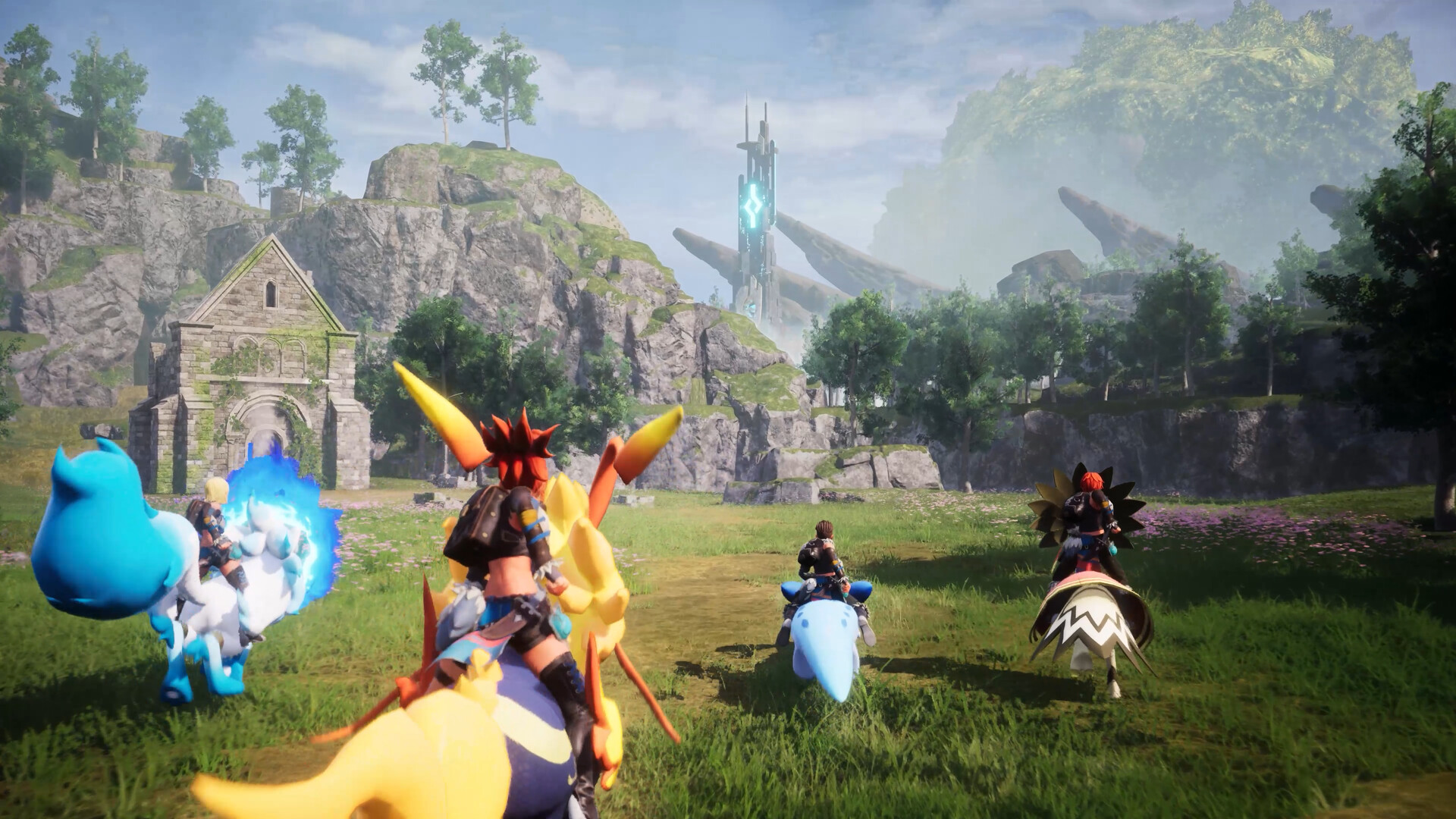
Quick Answer: The palworld 1.0 update marks the game’s full release era, and for players it means a polished survival-crafting loop, more systems to master, and a better reason to revisit Pals, bases, and progression in the current meta.
TL;DR: What the palworld 1.0 update means
The palworld 1.0 update is best understood as the game’s move into its full-release identity, even if the most talked-about news around launch week has often centered on community projects and visual mods rather than a single giant balance sheet of official patch notes. Palworld was fully released on July 10, 2026 Source, after its early access run that began in January 2024 on Windows and Xbox platforms Source. That matters because full release changes how you should read every system: breeding, base work, exploration, boss routes, and efficiency loops are no longer just “early access experiments,” they are the core game.
The patch context around this period is also useful for framing how the community is treating the update. On 2026-07-22, coverage highlighted an “Ultra Graphics” Palworld 1.0 mod that added ray-traced Lumen global illumination and had already reached 18,000 downloads Source. That is not an official gameplay change, but it shows the post-1.0 conversation: players are now thinking about how the finished version should look, run, and scale across hardware.
For a practical snapshot of the live ecosystem, Palworld remains very active. Steam’s review summary is Very Positive at 94.4% positive across 448296 reviews Source, while Steam’s current player count shows 545592 players in game on Steam right now Source. Those numbers do not tell you the exact balance state of every Pal or weapon, but they do confirm that the 1.0 era is a real reset point for a large audience, not a dead-end relaunch.
If you only need the practical takeaway, it is this: treat the palworld 1.0 update as a “start fresh, optimize smarter” moment. Expect the full-release baseline to reward cleaner base placement, better Pal assignment, and more deliberate progression than the chaotic early access mindset most veterans used.
Winners: who benefits most from the 1.0 era
The biggest winners in the palworld 1.0 update are players who like systems, planning, and long-term optimization, because full release makes those strengths matter more. Palworld is still, at its core, a monster-taming survival game from Pocketpair where you fight, farm, build and work alongside mysterious creatures called Pals Source. In practice, that means the people who profit most from 1.0 are the ones who already enjoy route planning, base specialization, and team composition rather than pure button-mashing.
Players who like long-form progression
Long-form players benefit because the game’s campaign-sized commitment is substantial even before you touch all the side systems. HowLongToBeat lists roughly 41.01 hours for the main story, 76.36 hours with extras, and 92.74 hours for completion Source. That is a strong sign that the 1.0 version is not just a quick ride to the credits. If you enjoy methodical progression, the full-release structure gives you a lot more to chew on than a simple one-and-done survival sandbox.
This especially helps players who like the following styles:
- Base managers who enjoy placing production close to resource nodes, then tuning the work assignment of Pals like Lamball, Cattiva, and Depresso.
- Explorers who prefer unveiling map zones, finding fast-travel points, and turning each new biome into a logistics stop.
- Collectors who care about filling the Paldex, hunting duplicate species for better passives, and building specialized breeding lines.
Players who want better value from ownership and platform support
The full release also benefits anyone who is deciding whether Palworld is worth installing, buying, or returning to. SteamSpy estimates the game is owned by 50,000,000 .. 100,000,000 Steam accounts Source, which is an enormous audience for a survival-crafting game. That scale usually matters because it helps sustain guides, mod support, multiplayer groups, and late-game community knowledge. In other words, if you are coming back at 1.0, you are not returning to a ghost town.
Compatibility is another quiet win. ProtonDB currently classifies the game as platinum and Steam Deck status is verified Source. For players on handheld-style setups or Linux-based gaming environments, that lowers the friction of re-entry. If your goal is to play the palworld 1.0 update on different devices without fighting your operating system, that is a meaningful quality-of-life advantage.
What “winner” means in play terms
Here are the groups that come out ahead in the current full-release era:
- Efficiency builders: You can structure a base around ore, stone, and crafting throughput instead of improvising.
- Breeders: Long-form players who enjoy chasing ideal passives and stronger offspring get more value out of repeated loops.
- Achievement hunters: SteamHunters tracks 75 achievements and 0 currently unobtainable achievements Source, which is excellent news if you like completionist goals.
- Speedrunners: Speedrun.com already tracks 7 main categories, and the Defeat Zoe world record stands at 1:00 by InAlucard Source. The full-release era gives runners a stable target.
If you are looking for the simplest possible answer: the palworld 1.0 update favors disciplined players, not just strong combat players. A good route, a good team, and a good base now matter more than ever.

You might also like
- Palworld Beginner Guide: First Steps, Resources, and Common Mistakes
- Palworld Legendary Blueprints in the Version 0 2 0 6 update: Beginner Guide
- Palworld Beginner Guide: First Steps, Priorities, and Common Mistakes
- Palworld Fastest Flying Mounts: Best Flying Pals to Unlock in Order
- Palworld UE-Pal Exception Access Violation Bug Fix: Beginner Guide
Losers: what gets less forgiving in full release
The biggest losers in the palworld 1.0 update are sloppy progression habits, overbuilt early bases, and players who relied on “I’ll fix it later” thinking. Because the game is now in its full release phase, there is less room to treat bad habits as temporary. Even when the exact official balance changes vary from patch to patch, the overall effect of a 1.0 launch is that inefficient play becomes more visible.
Early-game hoarders
Players who stockpile everything without a plan lose the most momentum. In Palworld, it is very easy to collect overlapping materials from zones with Lamball, Cattiva, and Pengullet-type early encounters, then let storage fill with low-priority items. That behavior was tolerable when the game felt experimental. In the full-release context, it becomes a drag because every extra stack in your base is another missed chance to streamline production.
The fix is simple:
- Keep only the materials that feed your current crafting tier.
- Convert raw mats into intermediates as soon as possible.
- Place storage close to where your Pals actually work.
Players who ignore base specialization
Another loser group is the player who tries to make one base do everything. Palworld’s survival-crafting loop is much healthier when your first base handles early production, your second base becomes a resource outpost, and your third is reserved for high-value crafting or breeding. The palworld 1.0 update rewards that mindset because full release tends to expose bottlenecks faster than early access did.
Examples of bad one-base thinking:
- Keeping ore mining, food production, and egg hatching in the same cramped spot.
- Putting far too many production stations beside each other without traffic lanes.
- Using combat Pals in work slots where a better labor Pal would save minutes every cycle.
Completionists who assumed everything would stay easy
Completion hunters are also on the losing end if they ignore structure. The rarest achievements are already tiny in global unlock rate: Valve’s global stats show the rarest tracked achievement sits at only 0.1% of players Source. That tells you how harsh the late-game checklist can be. If you leave major collection goals until after you “finish the story,” you are setting yourself up for a longer, more expensive cleanup phase.
Players on outdated habits from early access
The full-release era also punishes players who never updated their mental model from early access. For example:
- Old route habits may send you through areas that are no longer the best farming loops for your progression.
- Old team habits may leave you with one strong Pal and four dead weight slots.
- Old base habits may cause you to overinvest in decorative layouts before the production spine is stable.
A good rule for the palworld 1.0 update is to stop treating every system like a temporary placeholder. If a base, Pal, or route is not helping you right now, it is probably costing you more than you think.
Player action items: what to do differently starting today
The smartest thing to do after the palworld 1.0 update is to re-evaluate your world with fresh eyes and reset any habit that wastes travel time, work time, or combat tempo. Full release is the moment to correct messy builds and rebuild your route around efficiency. If you have been playing casually since early access, this is the right time to respec your priorities, not necessarily your entire character.
Re-roll your base priorities
Start by asking whether your current base order still makes sense. A lot of players built their first base around “whatever was nearby,” then never moved again. That is fine early on, but it becomes inefficient once your stockpile grows.
Do this instead:
- Put your main base where you can reach multiple resource types quickly.
- Use one outpost for mining-heavy operations.
- Keep breeding and crafting in a location with less travel congestion.
Concrete examples of why this matters: a base near common early materials can help you stabilize Lamball and Cattiva farming; a second site near dense ore is better for midgame metal throughput; and a third, cleaner location is usually better for egg management or passive breeding chains.
Re-spec your team around labor and combat
A strong Pal team in full release should not be built only around damage. You want a mix of combat utility and work efficiency. If your squad is full of one-purpose fighters, you are carrying dead weight during downtime.
A better rule is:
- One or two combat-focused Pals for field fights.
- One or two work-efficient Pals for base rotation.
- One flexible slot for whatever your current task needs.
That means you should re-check whether your current party still fits the loop you are actually playing. If you are spending more time at home than in boss fights, the team should reflect that.
Change your farming route
Your farming route should now be based on repeatable value, not nostalgia. If you are still running old loops because they “used to be good,” you are probably losing time.
Better route habits include:
- Circuiting areas that give multiple resource types in one trip.
- Returning to base only when your bags are actually productive, not just full.
- Using exploration runs to solve two problems at once, such as map reveal plus Pal capture.
If you are chasing collection goals, route around the creatures and materials you still need rather than overfarming what you already have enough of. That sounds obvious, but it is one of the most common efficiency leaks in this kind of game.
Decide whether to start fresh
Some players should restart after a major full-release milestone, especially if their early access world is cluttered with bad placement, misallocated resources, and half-finished systems. Others should stay in their existing save and just reorganize.
A restart makes sense if:
- Your base is a maze of misplaced stations.
- Your storage is permanently chaotic.
- You used to play without a long-term breeding or farming plan.
Keeping your save makes sense if:
- Your resource network is already stable.
- You have a curated Pal collection.
- You are close to achievements or endgame goals.
The palworld 1.0 update is not automatically a wipe, but it is absolutely a chance to play smarter than you did before.
Common Mistakes
The most common mistakes after the palworld 1.0 update are all about waste: waste of space, waste of time, and waste of Pal labor. Players usually make these mistakes because they are used to early-access improvisation, but full release rewards tighter discipline.
Keeping one oversized “do everything” base
- Players do this because it feels convenient to see everything in one place.
- The fix is to split duties: one base for production, one for mining, one for breeding or specialized crafting.
Carrying a combat-only party while doing base chores
- Players fall into this because they copy their boss-fight team into everyday play.
- The fix is to rotate in Pals with better work suitability when you are farming, hauling, or building.
Ignoring route efficiency and backtracking too often
- Players think extra trips do not matter, but they add up fast.
- The fix is to batch tasks: capture, gather, and reveal map points in the same outing.
Saving rare materials for “later” and never spending them
- Players hoard because they fear making the wrong upgrade.
- The fix is to spend key materials on whichever upgrade removes the biggest bottleneck right now.
Overfocusing on raw combat power instead of utility
- Players love big damage numbers, so they overlook movement, labor, and traversal benefits.
- The fix is to keep at least one flexible Pal in your active rotation for non-combat value.
Treating full release like early access
- Players assume the game will forgive temporary sloppiness forever.
- The fix is to review your entire loop: storage, base layout, team comp, and farming route.
If you correct only one thing, correct your base structure. In survival-crafting games, a bad base can quietly undermine every other decision you make.
Pro Tips
The best advanced advice for the palworld 1.0 update is to think in cycles, not moments. A strong player does not just win one battle or capture one rare Pal; they create a loop where each trip gives value to the next one.
Tip 1. Build for shortest walking distance, not prettiest symmetry
If your stations force Pals to zigzag across a huge floor plan, your production rate suffers even if the base looks nice. Keep food, storage, and high-use crafting stations close together, then separate only the truly noisy or specialized functions. A compact setup is especially useful when your base includes work-heavy Pals like Cattiva-style haulers or Depresso-style grinders.
Tip 2. Use your exploration runs to solve three problems at once
A good route can reveal the map, gather materials, and expand your Pal collection in one loop. For example, you might leave base to search for a needed resource cluster, detour through a biome with a missing creature, and return with enough materials to complete a station upgrade. That beats doing each task in isolation.
Tip 3. Keep a flexible “utility slot” in your party
One slot should always be reserved for the Pal that solves your current headache, whether that is combat, traversal, or field efficiency. If your current goal is boss hunting, prioritize combat support. If your goal is building, prioritize utility. That small discipline keeps your party from becoming stale.
Tip 4. Treat breeding as a long project, not a side hobby
Breeding becomes much more valuable when you decide on a target early and stop drifting between random species. Pick one chain, one role, and one outcome. For example, a worker line for base upkeep, a fighter line for raids, or a mobility line for map travel. Scattered breeding is one of the fastest ways to burn time in the current meta.
Tip 5. Watch for bottlenecks, not just shortages
Running out of one material is obvious. A more dangerous problem is when a specific station, route, or Pal assignment slows the whole base without looking broken. If one crafting step always piles up, reassign labor or move the station closer to storage. The full-release version rewards players who notice the slow leak before it becomes a full stoppage.
Tip 6. Revisit old zones after you upgrade travel or combat power
A zone that felt awkward early can become highly profitable later if your movement and damage improve. After you gain better traversal or stronger capture tools, go back to previous areas and clean up anything you skipped: missed Pals, unopened routes, or under-farmed resources. Old territory often becomes the easiest value on the map once your toolkit expands.
What the live numbers say about Palworld right now
The live ecosystem around Palworld suggests the game is healthy enough that the 1.0 era should matter for a long time, not just for launch week. Steam currently shows 545592 players in game right now Source, while the review base sits at 448296 reviews with 94.4% positive sentiment Source. That combination usually means there is still a large audience to learn from, challenge runs to attempt, and guides to update.
For anyone comparing completion speed, the contrast is also interesting. The main story estimate of 41.01 hours Source is long enough to feel substantial, but the 92.74 hours completionist estimate Source tells you where the real depth lives. In practice, the palworld 1.0 update is less about a single dramatic turn and more about a stable platform for all the game’s layered systems: collecting, optimizing, routing, and long-tail progression.
If you are coming back now, the smartest approach is not to ask “What changed in one patch?” but “Which habits still make sense in full release?” That mindset will carry you further than any one flashy build.
Related Guides
- Palworld Base Building Guide
- Best Pals for Early Game Progression
- Palworld Breeding Combos
- How to Optimize Pal Assignments
- Palworld Fast Travel and Exploration Tips
- Best Farming Routes in Palworld
- Palworld Achievement Guide
- Palworld Multiplayer Etiquette Guide
Sources
- https://en.wikipedia.org/wiki/Palworld
- https://store.steampowered.com/app/1623730/
- https://howlongtobeat.com/?q=palworld
- https://steamspy.com/app/1623730/
- https://www.protondb.com/app/1623730
- https://steamhunters.com/apps/1623730
- https://steamcommunity.com/stats/1623730/achievements
- https://www.speedrun.com/Palworld
- https://steamstore-a.akamaihd.net/news/externalpost/PCGamesN/1839041357023795
See also
- Palworld Beginner Guide
- Palworld All Player Attack Boosting Partner Skills Beginner Guide
- Palworld Not Found Session 91 Bug Fix: Beginner Guide for New Players
- Palworld What Carries Over to Version 1 0 Beginner Guide
- Palworld Beginner Guide
- Palworld List of Pals that Improve Carry Capacity: Beginner Guide
- Palworld Version 1 0 Release Time and Countdown Beginner Guide
- Palworld All Player Defense Boosting Partner Skills: Beginner Guide
- Palworld Choices Missables and One-Time Events: Beginner Guide
- Palworld Beginner Guide: First-Hour Tips, Priorities, and Common Mistakes
Screenshots



Reviewed by
Palworld Guides Editorial
Expertise: Editorial team behind Palworld Guides. Content is compiled from official patch notes, community wikis, and playthrough notes, then reviewed and updated on schedule.
Sources
Palworld Progression Guides →
Browse the complete progression collection and its focused guides.
Related Guides



🔥 Popular Guides
Palworld Points of No Return — What You Cannot Undo
Palworld points of no return explained: story locks, base relocation limits, and Pal releases you cannot undo. Know these before you progress.
Idiosyncratic Passive Skill Palworld — Effect, Stacking & Best Pals
Idiosyncratic boosts a Pal's unique trait in Palworld. Learn the exact effect, whether it stacks, which Pals have it, and when to keep or breed it out.
Palworld Hartalis Slab Fragment Beginner Guide
Learn what Palworld Hartalis Slab Fragment is, how to handle it, early priorities, mistakes to avoid, and when you’ve outgrown beginner status.
Palworld Feathered Hair Band Beginner Guide
Learn what the Palworld Feathered Hair Band does, how to use it early, what to craft first, and when you leave beginner stage.
📋 Patch Notes & Updates
🛠️ Popular Tools
Was this guide helpful?
Rate this guide so we can improve it.
Share your own tip
Found something not in the guide? Submit it below — our editors review every tip before publishing. No account required.