 Palworld
Palworld 1.0 Update Release Date Explained
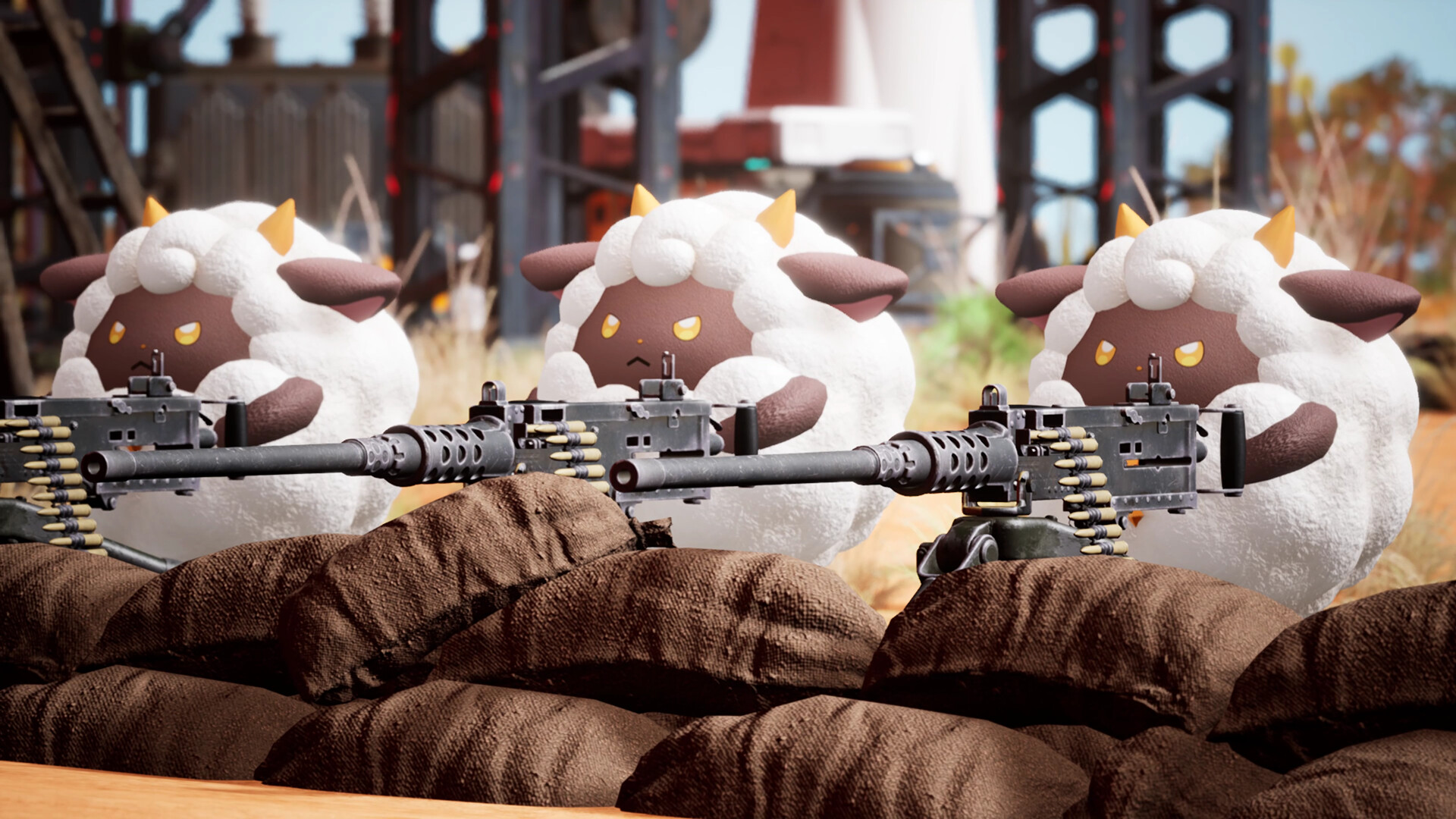
Quick Answer: The palworld 1.0 update release date was July 10, 2026, with Version 1.0 launching around 11:00 AM JST on all available platforms and moving the game out of Early Access into its official release state.
TL;DR
Palworld Version 1.0 shipped on July 10, 2026, and the headline change was not a single balance tweak but a full official release. The patch moved the game out of Early Access, arrived around 11:00 AM JST, and landed as 1.0.0.100427 on PC (Steam), which is the anchor point for everything else in this article. That timing matters because a lot of players searched for the palworld 1.0 update release date first, then wanted to know whether they needed a wipe, a fresh world, or just a normal update.
This is a broad, content-heavy release. The confirmed changes include over 70 new Pals, new map areas, new items, major balance adjustments, bug fixes, and visual character updates. It also changes default world settings, which is the part that affects moment-to-moment play the most for returning players. On Normal difficulty, players no longer drop equipped items on death when starting a new game or resetting world settings. On Hard difficulty, player damage taken has also been adjusted. Those are not cosmetic notes; they change how forgiving your early progression feels the moment you load in.
Two practical details are especially important. First, save data from v0.7.3 or earlier can spawn outside the updated boundary, so old worlds may need an emergency move if they break on load. Second, partner skill descriptions now reflect rank-based changes directly, which makes build planning easier because the UI finally tells you what your ranked Pal actually does instead of forcing you to memorize the upgrade steps.
For a broader game-state reference, Palworld is still carrying unusually strong player interest even after release. Steam’s current review summary reads “Very Positive” at 94.5% positive across 468157 reviews, with about 404196 players in game on Steam right now. That gives context for why Version 1.0 matters: this was not a minor maintenance drop, but the point where the game crossed from early access into its long-term live form. Source
What Shipped
Version 1.0 is Palworld’s official release patch, and it shipped with enough new content and system changes to count as a full platform transition rather than a routine balance pass. The most reliable summary is simple: Pocketpair added lots of new world content, widened the roster substantially, refreshed character customization, and reworked several default settings that affect survival, death, and load-in behavior. The game also got a new build identifier, 1.0.0.100427, which is the cleanest technical marker for the launch. Source
The scale of the update is easiest to understand in layers:
- Content layer: over 70 new Pals, new map areas, new items, and additional island content.
- Systems layer: major balance changes, bug fixes, and updated default world settings.
- Presentation layer: new hairstyles, face types, hair accessories, and a refined default facial model.
- Progression layer: partner skill descriptions now show rank-based effects directly.
That mix tells you how to read the patch. It is not just “more stuff.” It is a release-state cleanup pass that tries to make old systems legible, while also giving players fresh reasons to start over or revisit old saves.
One detail worth emphasizing is that the release date was not a vague window by launch day. Pocketpair had already signaled an approximate midday rollout on July 10, Japan time, and the release landed around 11:00 AM JST on all available platforms. That makes the palworld 1.0 update release date easy to pin down for players across regions, even if the exact local hour differs. Source
For players deciding whether to return now or later, Version 1.0 is the moment where the game becomes easier to recommend as a stable baseline. It is also the point where any guide, farm route, or build advice should assume the official release rules instead of the older Early Access environment. That matters for things like item-loss behavior, world reset decisions, and how you read Pal ability text.

You might also like
- Palworld How to Farm World Tree Holy Water and Ancient Relics
- Palworld how where find clear sealed realm terraria dungeon items
- Palworld steam farming sim like stardew valley satisfactory farmbotic
- Palworld how to re roll reset dungeon bosses alpha pals
- Palworld Beginner Guide: First Steps, Resources, and Common Mistakes
Winners
The biggest winners are new and returning players who care about progression clarity, world stability, and customization, because Version 1.0 improves all three at once. The patch also heavily favors players who enjoy collecting, building out a base, or experimenting with party composition, since over 70 new Pals and new map areas naturally create more room for exploration and route planning. Source
New content winners
The most obvious winners are collectors and explorers.
- Over 70 new Pals expand capture routes, breeding goals, and team variety.
- New map areas create fresh exploration targets and new reasons to re-scout the overworld.
- New items mean more crafting and base-economy options.
- New islands expand the geographic footprint of endgame roaming and local farming.
Those additions matter because Palworld has always rewarded repetition through efficient loops. When the game adds more creatures and more territory, the value of route knowledge goes up fast. If your old loop was built around a fixed set of spawns or biome rotations, Version 1.0 gives you more places to branch out and more reason to revisit your usual catch path.
Customization winners
Character creators get a real bump from this patch.
- 8 new hairstyles
- 5 new face types
- 13 new hair accessories
The player’s default facial model was also visually updated and refined. That sounds minor until you remember how often a survival-crafting game asks you to stare at your own character while managing menus, riding mounts, or building bases. These are quality-of-life additions, but they are also the kind that make a first-time setup feel less dated.
Clarity winners
Players who care about build theory gain something subtle but important: partner skill effects now show rank-based scaling directly in the description. The example in the release notes is straightforward. If a skill says “While in party, the weight of Ore is reduced by 80%,” it will update to “While in party, the weight of Ore is reduced by 100%” when the Pal’s rank increases. Source
That is a major usability win because it reduces guesswork in three common situations:
- Deciding whether to rank up a mining-focused Pal.
- Comparing a fresh capture against an already-upgraded party member.
- Checking whether a utility Pal is worth a slot in a hauling or ore-focused setup.
This sort of UI transparency helps in practical builds such as an Ore run, a base logistics team, or a travel loadout where rank-based weight reduction is the difference between one trip and two.
World-setting winners
Players starting fresh on Normal difficulty are also winners. Under the updated default world settings, Normal no longer drops equipped items on death when you reset world settings or start a new game. That is a meaningful early-game relief because it lowers the punishment for ordinary deaths while you are still learning enemy routes, tower behavior, and survival pacing. Hard difficulty was adjusted too, but for most players the bigger gain is that Normal became less punishing in a way that is immediately noticeable. Source
Here is the practical comparison:
| Area | Before the 1.0 default change | After the 1.0 default change |
|---|---|---|
| Normal death handling | Equipped item loss was part of the standard risk model | Players no longer drop equipped items on death when starting a new game or resetting world settings |
| Hard difficulty | Older balance rules applied | Player damage taken has been adjusted |
| Partner skill text | Rank scaling could be unclear in play | Rank effects are shown directly in descriptions |
That table is the real win condition for the patch: clearer systems, softer Normal defaults, and more content to work with. Source
Losers
The main losers are players who were relying on the old death rules, the old boundary layout, or the old ambiguity in partner skill descriptions. Version 1.0 does not look like a punitive nerf patch, but it does remove or tighten several assumptions that long-time players may have carried over from Early Access. Source
Death-risk veterans
If you built habits around item loss on death being a constant part of Normal difficulty, that expectation no longer holds after a clean start or a world-settings reset. The patch explicitly says that on Normal, players will no longer drop equipped items upon death. That lowers the stakes of mistakes, which is great for accessibility but bad news for anyone who enjoyed the harsher old loop. Source
That change has knock-on effects:
- Corpse recovery becomes less central on Normal.
- Early-game exploration gets safer.
- Equipment management matters slightly less during routine deaths.
- Some old caution-based farming routes are less valuable.
Hard difficulty players are also affected, though the note is less specific in the public summary. The patch says player damage taken has been adjusted, which means the old feel is not preserved exactly. In practice, any player who used Hard as a benchmark should treat the mode as newly tuned rather than unchanged.
Boundary and old-save players
The clearest technical downside is for older save files. If you continue using save data from v0.7.3 or earlier, you may spawn outside the updated boundary. That is not a theoretical annoyance; it is a direct risk for anyone returning to a very old world. The fix is to use “Emergency Escape” from the Options menu if that happens. Source
This creates a real loser category:
- Players who never reset and kept ancient saves.
- Worlds that were built around older map edges.
- Returning players expecting a clean load-in without boundary issues.
This is one of the few places where Version 1.0 can actively inconvenience legacy users. The game is telling you, in plain terms, that old geography assumptions may no longer hold.
Information-hiding losers
Players who prefer to infer mechanics from experience rather than read descriptions may feel the partner skill text update cuts both ways. It is objectively better for clarity, but it also exposes how much scaling was previously hidden. If you enjoyed treating upgrade outcomes as a mystery, that style of play is less viable now.
The same goes for broader progression planning. Because skill descriptions now surface rank effects, it becomes easier to identify underperforming Pals, utility dead weight, or upgrades that matter only at higher ranks. That does not weaken your team directly, but it removes the comfort of vague tooltips. In a system-heavy game like Palworld, clarity can feel like a nerf to intuition.
Legacy route losers
Old farming routes built around the previous world structure are also likely to lose value. The patch adds new map areas and islands, so familiar paths may no longer be the best use of your time once the new release-state world is loaded. When a game expands its play space this hard, the old “best route” often stops being best simply because the opportunity cost changes. The same goes for capture loops that were tuned around the pre-1.0 Pal roster. There are now over 70 new Pals in the pool, which means any route that ignored the new content is already incomplete.
What To Do Now
Your best move after the palworld 1.0 update release date is to treat this like a return-to-basics patch, not a normal hotfix. Start by checking whether your save is old enough to risk spawning outside the new boundary, then decide whether you want a clean world reset or a legacy continue. The more ancient the save, the more I would prioritize a careful login over diving straight into progression. Source
Immediate action list
- Check any save from v0.7.3 or earlier before committing to a long session.
- Use
Emergency Escapefrom the Options menu if your character appears outside the updated boundary. - Re-evaluate your Normal-difficulty world settings before starting fresh.
- Rebuild your team around the new partner skill descriptions instead of memory.
- Re-scout old farming routes because the world now has new map areas and islands.
- Prioritize capture goals for the over 70 new Pals before locking in a “final” team.
That list is not abstract advice. It follows directly from the patch notes, and it is the difference between wasting a session and making the most of the release build.
Respec-style thinking
Palworld does not hand out a traditional class respec the way an RPG might, but Version 1.0 does create a soft respec moment through world resets and team reevaluation. If you were leaning on a Pal because you thought a rank bonus was flat, go back and check the updated description. If you were using an old loadout simply because it had worked before, now is the time to compare it against the new content. The release improves description transparency specifically so you can make smarter loadout calls.
Concrete examples of what to revisit:
- Ore runs, especially if you use a partner skill tied to carry weight.
- Base hauling teams, where rank scaling can determine efficiency.
- Exploration squads that were built before the new map expansion.
- Normal-difficulty survival builds that previously depended on item-drop punishment.
Farm-route changes
Your farm routes should now be based on three questions:
- Which new Pals are worth intercepting on your current path?
- Which new islands or map areas shorten or improve your travel loop?
- Which old route is now obsolete because the release added a better option nearby?
That last question matters more than people expect. In an expansion-like patch, the old efficient route often survives only if it still serves a specific resource bottleneck. Otherwise, the new content usually pulls players toward different travel lanes and different capture windows.
World choice
If you are undecided between continuing an old save and starting fresh, the answer depends on how much of the game you want to see in release form. Old worlds are fine if they are healthy, but fresh worlds get the cleanest version of the new default settings, the full character customization refresh, and the least friction from old boundary logic. Returning players who care about long-term progression should at least test whether their old save behaves normally before investing hours into it.
For readers looking for a broader restart plan, a related guide on early 1.0 progression and a hub tips tricks tips on base rebuilding priorities would fit here naturally.
Why The Release Matters
Version 1.0 matters because it changes Palworld from a game in open-ended development to a game with an official release identity. That shift is bigger than the headline content count. It changes how players interpret balance, how guide writers frame advice, and how returning users judge the stability of older saves. The release date itself is important because it marks the point where all future comparisons should start from a post-Early Access baseline rather than a testing-era one. Source
This matters especially for a game like Palworld, where systems overlap heavily. Pals are not just collectibles. They are utility tools, combat companions, hauling helpers, and route enablers. A patch that adds over 70 new Pals changes more than the dex count; it changes the practical shape of base labor, travel efficiency, combat choices, and the value of ranked abilities. When the partner skill UI becomes clearer at the same time, the game is quietly saying that build planning is now a first-class activity instead of a side hobby.
It also matters because Version 1.0 is trying to solve one of the hardest problems in long-running survival games: making the first hour less punishing without flattening the challenge for committed players. The new Normal rule against dropping equipped items on death does exactly that. It softens the learning curve, helps players stay in motion, and reduces the frustration of getting set back by routine mistakes. Meanwhile, the Hard setting still exists for players who want a sharper edge, and the world-setting note suggests that difficulty tuning remains a conscious part of release-state play.
For players coming in from old coverage, this is the point where the old “Early Access caveat” should disappear from your mental model. The game is no longer asking whether it might someday become something substantial. It already has. The release includes enough new Pals, map expansion, and system clean-up to justify treating it as the starting line for serious guides, team planning, and replay advice.
Sources
- Game8: Palworld Version 1.0 release date and time
- Palworld Wiki GG: 1.0.0
- IGN: Palworld Dev Offers Approximate Release Time for 1.0 Update
See also
- Palworld How to Beat Hard Mode Lily and Lyleen
- Palworld Legendary Blueprints in the Version 0 2 0 6 update: Beginner Guide
- Palworld 1.0 release date patch notes: full release explained
- Palworld patch notes 1.0.2.101103 Explained
- Palworld Beginner Guide: First Steps, Priorities, and Common Mistakes
- Palworld Fastest Flying Mounts: Best Flying Pals to Unlock in Order
- Palworld How to Beat Xenolord - Strategy and Weakness
- Palworld How to Gather Resources at the World Tree
- Palworld Beginner Guide
- Palworld UE-Pal Exception Access Violation Bug Fix: Beginner Guide
Captures d'écran


Relu par
Palworld Guides Editorial
Expertise: Editorial team behind Palworld Guides. Content is compiled from official patch notes, community wikis, and playthrough notes, then reviewed and updated on schedule.
Sources
🔥 Tendances du moment
Palworld 1.0 Patch Notes Deutsch : explication complète des notes de patch
Palworld 1.0 patch notes deutsch expliqué : équilibrage des combats, corrections de bugs, nouvelles fonctionnalités, gagnants, perdants et quoi faire ensuite.
Guide des succès de l’Oil Rig dans Palworld
Nettoyez l’Oil Rig de Palworld, suivez les succès rares et suivez une route à 100% avec les données de niveau, de loot et de progression.
Notes de patch Palworld 1.0.3 expliquées : ajustements d’équilibrage, changements de déverrouillage et correctifs de bugs
Les notes de patch Palworld 1.0.3 abaissent des déverrouillages clés, boostent l’accès à Jetragon, nerfent la cadence de tir du Sphere Launcher et corrigent un bug d’Alpha Pal.
Palworld : Comment farmer l'eau bénite de l'Arbre-Monde et les Reliques anciennes <>
Apprends le chemin le plus rapide vers le World Tree pour récupérer Holy Water et Ancient Relics, avec la préparation, les étapes, les erreurs à éviter et des conseils de farm pour l’endgame.
📋 Notes de patch expliquées
🛠️ Outils populaires
Ce guide vous a-t-il aidé ?
Évaluez ce guide pour nous aider à l'améliorer.
Share your own tip
Found something not in the guide? Submit it below — our editors review every tip before publishing. No account required.